Step 01
Discover
Audit the current product, interview stakeholders and agree what success looks like.


Interfaces people understand without being taught.
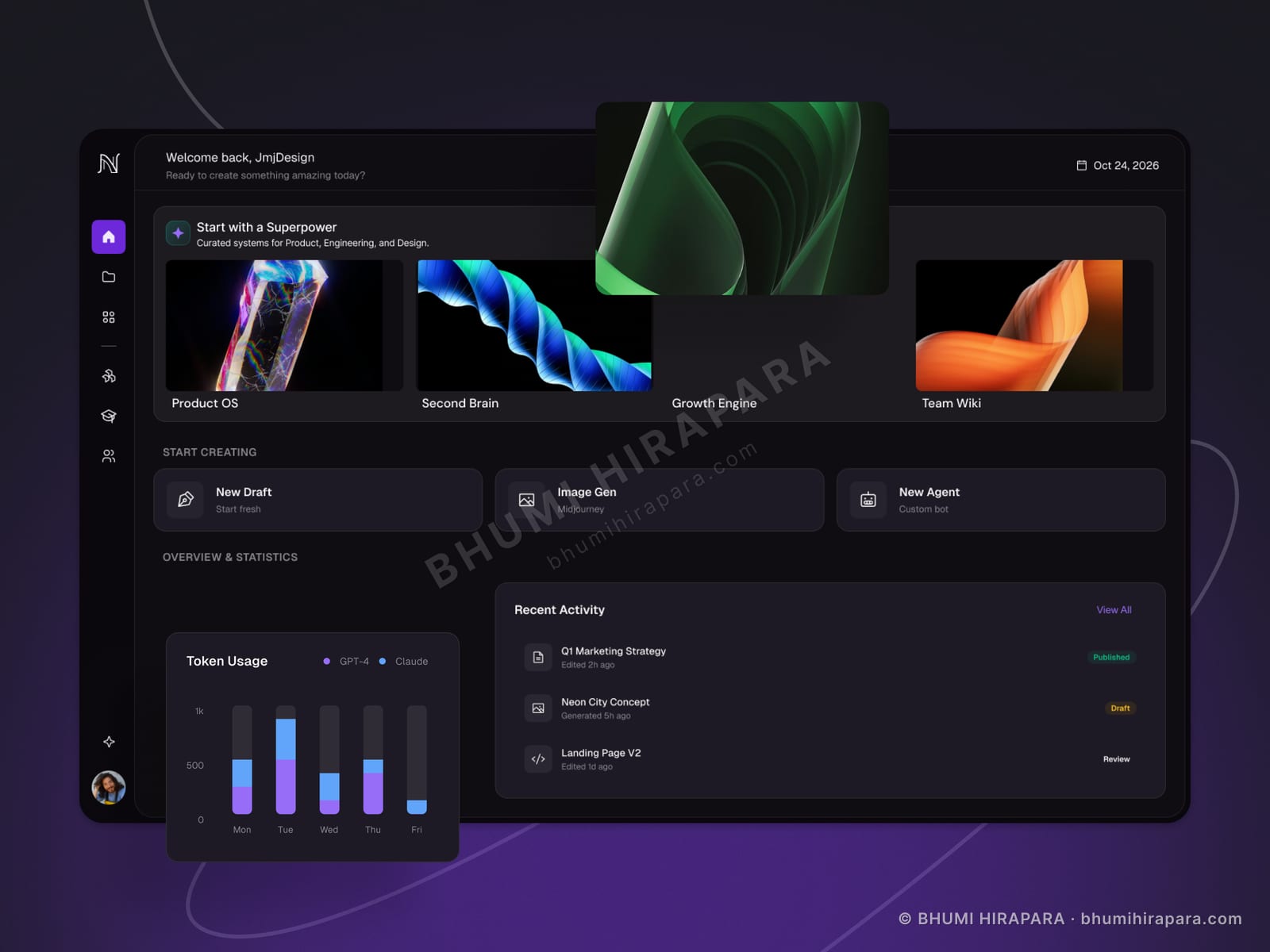
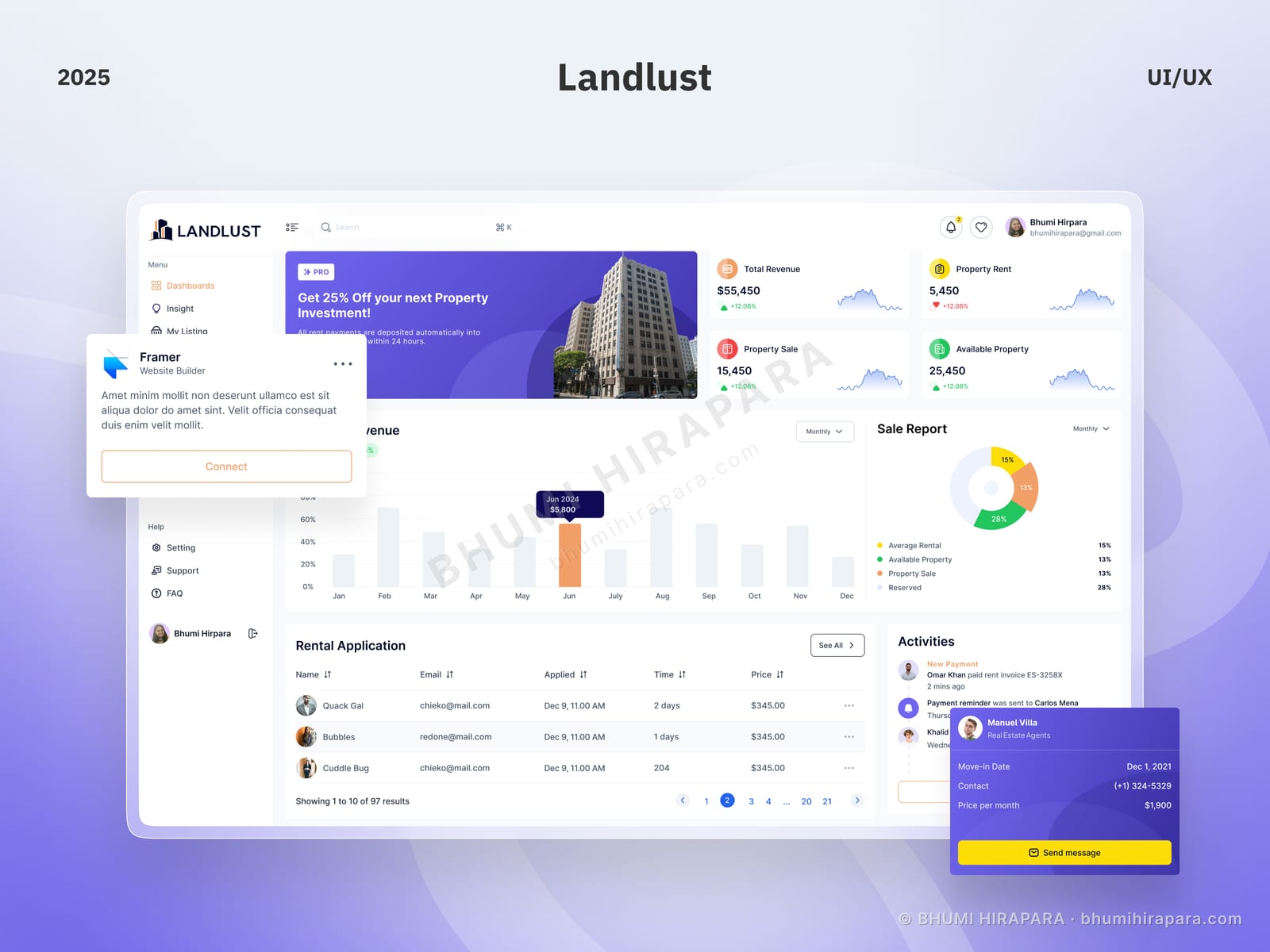
End-to-end UI/UX design for web and mobile products - research, user flows, wireframes and polished interface design that turns first-time visitors into confident users.
UI/UX design is the core of my practice. I start by understanding who uses the product and what they are actually trying to get done, then shape that into flows and screens that feel obvious to use.
Every project runs the same way: research and audit first, then structure, then visual design, then a developer-ready handoff. You see work at each stage, so there are no surprises at the end.
I have delivered this for SaaS platforms, ecommerce brands and mobile apps across the US, UK and India over the last six years, most of it through long-running Upwork engagements.
People often use "UI" and "UX" as if they were the same job. They are not. UX design decides how a product works - which screens exist, what order they come in, what happens when something goes wrong. UI design decides how that structure looks and feels - type, colour, spacing, motion and the state of every control.
I deliver both, because separating them tends to produce one of two failures: a beautiful product nobody can navigate, or a logical product nobody wants to use. The work runs as a single process where structural decisions and visual decisions inform each other.
A typical engagement includes stakeholder interviews, a review of any analytics or support tickets you already have, user flows for the primary journeys, wireframes for every key screen, a high-fidelity interface built on a reusable component library, and an annotated handoff your developers can build from without guessing.
Founders who have validated an idea and need it designed properly before the build. Product teams carrying a interface that has grown organically and now confuses new users. Agencies who need a design partner for client work. Established businesses whose product looks dated next to newer competitors.
The common thread is that the product matters enough to get right, and there is a real user whose time is worth respecting. If you need a quick visual refresh with no interest in how people actually move through the product, I am probably not the right fit.
Research does not have to mean a six-week study. On most projects it means talking to five to eight people who use the product or match the target audience, watching them attempt real tasks, and reading whatever evidence already exists - support tickets, session recordings, drop-off points in your funnel.
That is usually enough to separate the problems you assume you have from the ones you actually have. I write findings up as a prioritised list with a recommended change against each one, so the research produces decisions rather than a document that gets filed away.
Editable Figma files, organised so someone else can work in them. A documented component library covering every state - default, hover, focus, active, disabled, loading, empty and error. Annotated specs for spacing, type scale and behaviour. Exported assets at the sizes and formats your build needs.
I also stay available during the build. Most handoff problems surface when a developer hits a case the design did not cover, and answering that quickly is cheaper for everyone than a formal change request.
I work with clients across the United States, the United Kingdom, Europe, Australia and India, and remote collaboration has been the normal mode for my entire freelance career. We agree overlapping hours up front - typically a few hours of overlap with US Eastern or UK time - and I keep written updates flowing so progress is visible without needing a call.
Rates for senior design work in India are meaningfully lower than in the US or UK for the same standard of output, which is why a large share of my work comes from overseas teams.
UX design decides how a product works - the flows, structure and logic a user moves through. UI design decides how it looks and feels - layout, colour, type and interaction. I deliver both together, because a beautiful interface over a confusing flow still fails.
A focused project such as a marketing site or a single app flow typically takes two to three weeks. A full product design covering research, wireframes and a complete interface usually runs four to eight weeks, depending on how many screens and states are involved.
Yes. If you already have a design system or brand guidelines I design within them and extend them where needed. If you do not have one, I can build a reusable component library as part of the project.
I work at $24 per hour, $900 per week or $3,520 per month. A small project such as a landing page or single app flow usually lands under a week; a full product design is typically three to six weeks of work.
Yes. I hand off annotated Figma files with a documented component library, and stay available through the build to answer the edge cases that always come up once code meets design.
How a ui/ux design engagement actually runs, start to finish.
Audit the current product, interview stakeholders and agree what success looks like.
Map user flows and information architecture, then wireframe the key screens.
Build the high-fidelity interface on a reusable component library.
Deliver annotated Figma files, specs and assets your developers can build from.


Full Time Contract Available. Tell me about your project, your timeline and your budget, and I’ll reply with an approach and a rate.
Start a project